The Right Way to Load a Moving Truck So Nothing Shifts
October 12, 2026
QUICK ANSWER: To load a moving truck so nothing shifts, build it in solid tiers from the front wall to the back door. Put the heaviest, most stable pieces first against the cab wall, set boxes in tight rows on top of them, fill every gap so nothing has room to slide, and strap each finished section before starting the next. Keep weight low and centered, stand mattresses and sofas on edge along the walls, and place fragile cartons high in the middle where nothing can land on them. A load that cannot move when you push on it is a load that will arrive in the same order it left.
The truck is open, the ramp is down, and the first thing carried up it decides how the next six hours go. Start with a lamp and a stack of kitchen cartons and you will spend the afternoon rebuilding a wall that keeps leaning. Start with the washer, the dressers, and the long dining table and the rest of the load has something solid to stand on. Most damage in a move does not come from one big accident. It comes from small shifts, a box sliding an inch on every turn until it finally meets a corner.
Knowing how to load a moving truck is mostly about thinking in layers and in sections. A truck is a long, narrow room that gets shaken, braked, and swung around curves for hours. Anything not pinned in place will find a way to travel. Across Fort Bend County that means stop and go traffic on the Southwest Freeway, a few railroad crossings, and the sudden brake on the Grand Parkway that nobody planned for. The crew approach is the same every time: heavy and square at the bottom, light and soft on top, no empty space anywhere, and straps on every section before the next one begins.
Think of the Truck as a Series of Walls
A well loaded truck is not one big pile. It is a stack of vertical sections, each one as wide and as tall as the box, built from the front to the back.
Work Front To Back In Slices
Work front to back in slices. Imagine the truck divided into dresser-width sections. Fill each slice floor to ceiling, creating stable, strap-ready walls.
Load Against The Front Wall First
Load against the front wall first. The cab end provides a solid surface, while forward weight improves steering and braking. Heavy rear loads can cause sway.
Keep The Weight Low And Centered
Keep the weight low and centered. Put heavy items on the floor and distribute them evenly across the width. This keeps the truck stable through turns.
Heavy Pieces Go First, and They Go Where They Belong
The order of the first few items sets the foundation, so it pays to be deliberate about what comes up the ramp early.
Appliances And The Heaviest Furniture
Appliances and the heaviest furniture form the load’s base. Washers, dryers, refrigerators, freezers, and solid wood dressers go in first, upright and securely positioned as intended.
Long Flat Pieces Along The Walls
Long, flat pieces belong along the walls. Stand dining tabletops, headboards, box springs, and mattresses on edge with moving blankets protecting both the pieces and truck walls.
Sofas On Their Ends Or Backs
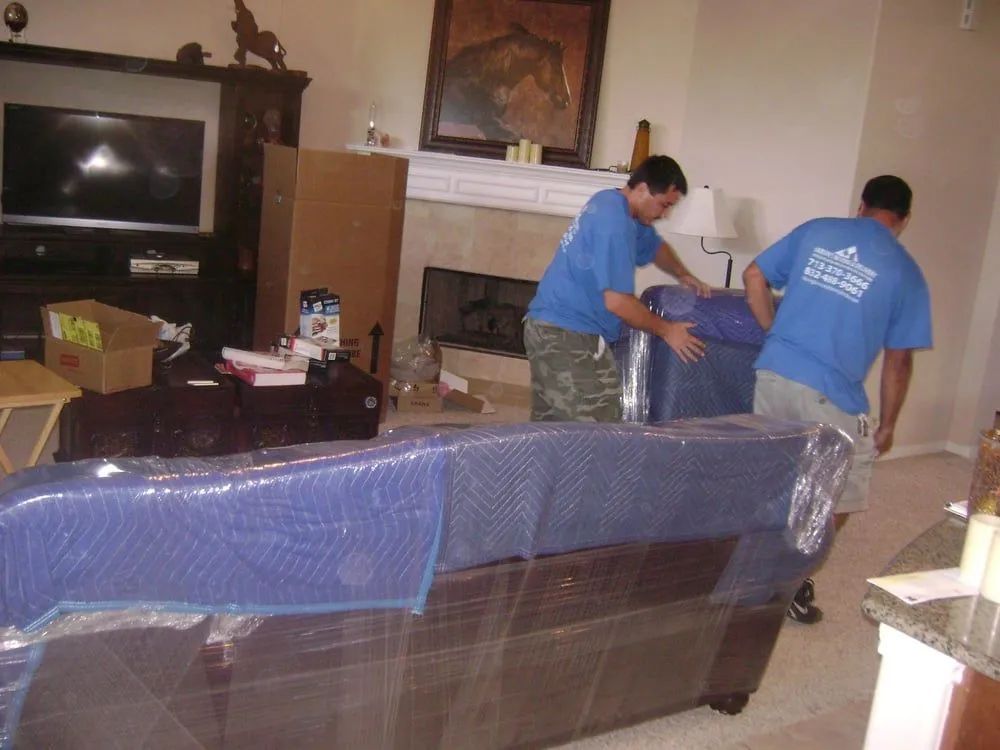
Sofas should travel on their ends or backs, never beneath heavy cartons. Wrap and strap them securely, keeping upholstery free from pressure that could permanently deform cushions over time.
Sectionals And Tables Loaded As Parts
Sectionals and tables should be loaded as separate parts. Remove detachable legs and split sections first. Disassembled pieces sit flatter, stack safely, and make securing everything much easier overall.
The idea behind all of it is a simple one. Put the base down first, and make it flat, heavy, and hard to knock over.
Build Tiers With Boxes, Then Lock Every Gap
Once the heavy pieces are in, the boxes go on top of them. This is where a load either becomes a solid block or a pile of loose parts waiting to fall.
Heaviest Boxes On The Bottom, Lightest On Top
Place the heaviest boxes on the bottom and lightest items on top. Books, tools, and paint belong low, while linens, pillows, and lampshades finish each tier.
Square Sides Face Out
Keep box sides facing outward and edges aligned. Fit cartons tightly together and stagger the joints between rows, creating stable walls that resist shifting during transit.
Fill Every Hole
Fill every gap before moving on. Use pillows, blankets, cushions, towels, or small furniture to wedge open spaces and prevent cartons from sliding into neighboring items.
Keep The Top Of Each Tier Flat
Keep every tier level and flat, creating a solid shelf for the next row. Use cardboard, blankets, or flat pieces to correct uneven sections before stacking.
TIP: Before you close a section, push hard on the top row from the side. If anything gives, rocks, or slides, it needs another blanket, a different box, or a tighter fit before the straps go on. A test shove in the driveway takes ten seconds and saves a broken carton on the highway.
Where Fragile Items Actually Belong
Fragile boxes are the ones people tend to put in the wrong place, either because they are afraid to bury them or because they are afraid to crush them.
High And In The Middle, Not On The Floor
Place fragile cartons high and centrally, supported by sturdy boxes and furniture. Mid-height positioning reduces road vibration and protects glassware, artwork, and lamps from shifting.
Nothing Heavy Above Them
Give fragile cartons their own surface with nothing heavy stacked above them. Mark each lid clearly, so everyone handling the load knows its contents require careful handling.
Mirrors And Framed Pieces Ride On Edge
Transport mirrors, frames, and glass tabletops upright, wrapped in blankets and protected with cardboard. Standing them on edge prevents overhead weight from pressing against fragile surfaces.
Plants And Electronics Get Their Own Corner
Give electronics and plants dedicated spaces. Keep televisions upright, wrapped, and strapped securely. Protect plants from crushing, excessive heat, and anything else that could damage them.
Strapping and Securing Each Section
A load can be perfectly stacked and still travel badly if nothing holds it. Straps and ties turn a stack of separate pieces into a block.
Strap Each Section As You Finish It
Strap each section immediately after completing it. Attach straps to the wall rails and pull the load tight, keeping finished sections stable and preventing movement during loading.
Use Blankets Between Hard Surfaces
Place moving blankets between hard surfaces, including furniture and walls. They prevent scuffs, dents, and scratches while adding friction that helps keep pieces securely positioned throughout transportation.
Tie Off The Last Section At The Door
Secure the final section across the doorway with a strap or rope attached to both wall rails. This prevents items from shifting or falling when doors open.
Check The Straps After The First Few Miles
Check straps after the first few miles because loads settle during travel. Tighten anything that loosened, then continue driving once the entire load remains secure and stable.
WARNING: Never stack heavy cartons on top of a mattress, a sofa cushion, or a lamp, and never leave an unstrapped tall piece standing alone in the middle of the truck. A tall piece with nothing holding it will tip on the first sharp turn, and a stack with nothing underneath it will crush what it rests on.
Planning the Load Before the First Box Moves
The best loads are planned before the truck is opened. A few minutes of thinking at the start prevents an hour of rearranging in the middle.
Know What Goes In Last
Load first-night essentials last, including the bed frame, first-night box, and cleaning supplies. Keeping them near the doors means they come off first, simplifying arrival and setup.
Group By Room, Then By Weight
Group belongings by room to simplify unloading, then arrange each group by weight. Heavy items belong below lighter cartons, while labels show exactly where everything belongs.
Walk The Path First
Walk the route before loading to identify tight turns, stairs, and low doorways. This helps determine what goes first and which furniture pieces need disassembly.
Do Not Overpack The Truck
Do not overpack the truck. If everything cannot fit safely, use a larger truck or make another trip. Extra space prevents rushed loading and careless placement.
Why a Professional Crew Loads Differently
There is a reason movers can fill a truck in half the time it takes a household and still have it ride quietly. It comes down to repetition and a set of habits that never change.
The Same Crew Loads And Unloads
The same crew handles loading and unloading, so they understand how furniture was positioned, protected, and secured. That continuity makes the process more organized from start to finish.
Every Item Has A Place Before It Is Carried
Experienced crews plan the truck before moving anything. Large furniture, appliances, and mattresses receive specific positions, while smaller pieces are assigned spaces that complete the load efficiently.
Tools And Supplies Are Already On The Truck
Professional crews arrive with dollies, ramps, straps, blankets, and harnesses. Proper equipment lets heavy items move through controlled techniques, reducing unnecessary strain, damage, and awkward handling.
Frequently Asked Questions
What should go in a moving truck first?
The heaviest, most stable items go first, against the wall behind the cab. Appliances, solid wood dressers, and large furniture form the base, with mattresses and tabletops stood on edge along the walls.
How do you keep boxes from shifting in a moving truck?
Fill every gap, build tight tiers with the heaviest boxes on the bottom, and strap each section to the rails as you finish it. Stagger the seams between rows and use soft items to fill holes.
Should a mattress go flat or on its side in a moving truck?
Stand it on its edge against a side wall, wrapped in a mattress bag and a blanket, and strap it to the rail. Laid flat, it usually ends up under something heavy and can stay dented.
Where should fragile boxes go in a moving truck?
Place them at mid height on a flat, sturdy tier, held on the sides by furniture, with nothing heavy above them. The floor carries road vibration and the top row takes the shock of any shift, so the middle is calmest.
Tight Tiers and Strapped Sections Protect Every Load
Loading a truck well is a matter of discipline more than strength. Heavy pieces sit flat on the bottom, tight tiers rise above them, no empty space is left anywhere, and every section gets a strap before the next one begins. Do that and the truck rides quietly through Sugar Land, Missouri City, and Houston traffic, and the load comes off in the same order it went on. A little patience at the ramp saves a great deal of repair work at the other end.
With 15
years of
experience moving households
in Sugar Land, TX, Marvin's Moving and Delivery
has learned that a calm ride starts with the first appliance carried up the ramp. Blankets between hard surfaces, fragile cartons placed at mid height, and a final strap across the last wall keep everything standing until the doors open again. Families who see their belongings arrive without a scuff tend to remember the move as a smooth day instead of a stressful one.